
Decision-making and the media
From the Middle Ages to the 2020s
The shores of Lake Jämijärvi were settled in the Middle Ages. The fishy lake attracted wilderness visitors and gradually the land was cleared and cultivated. The settlement spread from east to west around the lake all the way to Kankaanpää. In the 1800th century, the residents became eager to solve their own problems and the people of Jämijärvi formed their own preaching house in 1852, which is also when self-government is considered to have begun in Jämijärvi.
The turbulent decades of the early 1900th century passed relatively peacefully in Jämijärvi. Since then, the municipality has developed into a modern rural municipality, where, in addition to traditional livelihoods and lifestyles, there are also exciting and unique opportunities for hobbies.
In the 2020s, the municipality has been a net migration winner for several years, and in 2025 the municipality's population grew after a long break. The municipality has bright prospects for the future.
Learn about the history of the municipality with Olavi Heikkilä's book "Jämijärvi through the centuries" (1992). Available online here.
Served as chaplain of Jämijärvi from 1858 to 1865 Wilhelm Carlsson (1834–1875) has estimated in his description of the parish, based on local accounts, that Heiska, located in Pitkäniemi, Jämijärvi, was founded in the 1400th century. Similarly, Carlsson estimates that the Soini farm was founded around the same time.
It is possible that the shores of Lake Jämijärvi have been inhabited since the 1300th century. A significant factor in the permanent settlement has been the lake's fish, the produce of which has been enjoyed on a very large scale. The aforementioned Carlsson has described the lake in many words as one of the most beautiful with its many islands. The lake therefore probably attracted people to stay early on, but reliable information about the extent of the settlement is found in the land register of 1540. In any case, Jämijärvi can be considered to have been permanently inhabited in the Middle Ages.
Initially, the settlement was mainly located in the eastern parts of the lake, but gradually spread around the lake and westwards to Kankaanpää. In the 1700th century, the settlement began to spread more widely and in the middle of the century the population grew strongly. The uncultivated wilderness narrowed and the last areas to be settled were Sydänmaa after the middle of the 1700th century. The population register states, for example, that Peltoniemi was founded in Rannanperä in 1738, Tykköö on the shores of Lake Tykkööjärvi in 1748, Jämiäluoma in 1781 and so on. There is comprehensive information on the settlement and traditional Jämijärvi families Olavi Heikkilä from the book Jämijärvi through the centuries (1992).
Administratively, the Jämijärvi wilderness area originally belonged to the extensive Sastamala parish, which is considered to have stretched from Näsijärvi to the Gulf of Bothnia, from Vammala to the Ostrobothnian plains, encompassing the entire northern Satakunta region. In the late Middle Ages, the parish was divided so that the Jämijärvi area belonged to the Kyrö parish, the center of which was Hämeenkyrö.
The Ikaalinen parish became independent in 1641, and thus the Jämijärvi area also became part of the Ikaalinen parish. When reflecting on the development of churchwardens in the settlement history of Jämijärvi, the people of Jämijärvi can be considered to have administratively belonged to the Ikaalinen parish and the main parish before their own self-government.
The growth of the population and the weak connection to Ikaalinis eventually led to Jämijärvi becoming independent. The development of the settlement of Jämijärvi was more peaceful from the end of the 1700th century until the beginning of the 1800th century, when the population began to grow again, reaching around 1600–1800 inhabitants in the mid-1850s. Since the road to Ikaalinis ran along forested areas through Vatula and Vatsiainen and was therefore difficult to maintain the connection to the parish, and as the population began to grow somewhat, steps were taken to manage their own affairs.
The people of Jämijärvi petitioned the Senate of Imperial Finland to establish a sermon hall and cemetery, and to transfer the parish clerk of Ikaalinen to Jämijärvi. The Senate made a positive decision on the matter on 2 July 1852, which can be considered at least half-seriously the anniversary of Jämijärvi's self-government.
Following the Senate's decision, the people of Jämijärvi enthusiastically set about starting a parish in Jämijärvi. In a second petition sent to the Senate through the cathedral chapter, the people of Jämijärvi promised the priest, among other things, an extra salary increase, that he would be given temporary housing, and that a temporary church would be established in the large hut in Ala-Peijar.
The Imperial Majesty granted the request of the Jämijärvi people on 12 May 1854, and after the Jämijärvi people fulfilled their promise, the parish priest who had helped establish the parish moved from Ikaalis. Adolf Cedberg To Jämijärvi on May 1, 1855. Cedberg's contribution to the parish life and the construction of the church is considered significant. Because the parish life took place in the Ala-Peijar pirtti until the church was built in 1860, the people of Jämijärvi were called pirttikirkkolaini.
After Cedberg became the parish priest of Orivesi, the people of Jämijärvi requested the right to have a parish priest and the freedom to choose the parish's first chaplain. The Senate agreed to this on 6 October 1863, and the assistant pastor of Pirkkala, Wilhelm Carlsson, was elected as the first chaplain. Carlsson was a talented and diligent man who recorded the history of our parish from his hut in the Kaskisaari park. Carlsson was a well-liked person.
Wilhelm Carlsson (1834–1875) served as the chaplain of Jämijärvi from 1865 to 1875. Carlsson was the first parish priest of Jämijärvi and one of the founders of the sermon hall. Adolf Cedberg (1817–1895), an important person in the early stages of the parish.
Carlsson was a diligent writer and in total he wrote or translated into Finnish about 50 works, including a couple of parish descriptions. Carlsson was a local historian, about whom the people of Jämijärvi had many good things to say. Carlsson was elected vicar of Nastola in 1875 and he died the same year at the age of 41.

Actual municipal life in Jämijärvi began in 1865 with the decree on rural municipal government, or the municipal decree. After this, the decision-making power in rural municipalities belonged to the municipal assembly. Voting rights depended on tax liability and administration was still rudimentary for a long time. The first municipal assembly in Jämijärvi was not held until 1868, but by the 1880s, meetings were held on average every month.
The municipal assembly decided on a variety of issues. For example, in 1889, the municipal assembly stated that no ill-reputed Parkano residents Oscar Isaacson with their families to be admitted as residents of the municipality. Similarly, in 1892, the municipal assembly thoroughly discussed the collection of a dog tax, but decided not to collect the tax.
The leaders of the municipal assembly have been: Juhan Soini, F.E. Bergroth, H.W. Wecksell, Kaarlo Elomaa, Vihtori Konsen ja Frans Salonen and those who served as municipal council leaders during the corresponding period Ephraim ja Frans Kontti and Alex Sipila. The role of the municipal board grew in the 1930s, and the chairman of the municipal board largely took care of the implementation of decisions and the management of the municipality's finances. The first municipal clerk was elected on 12 February 1934. He started as a clerk Eino HautamäkiAfter Hautamäki, in 1939, he was elected to the position Maija Jamsa (born Siika), who served in the position for 37 years until his retirement in 1976.
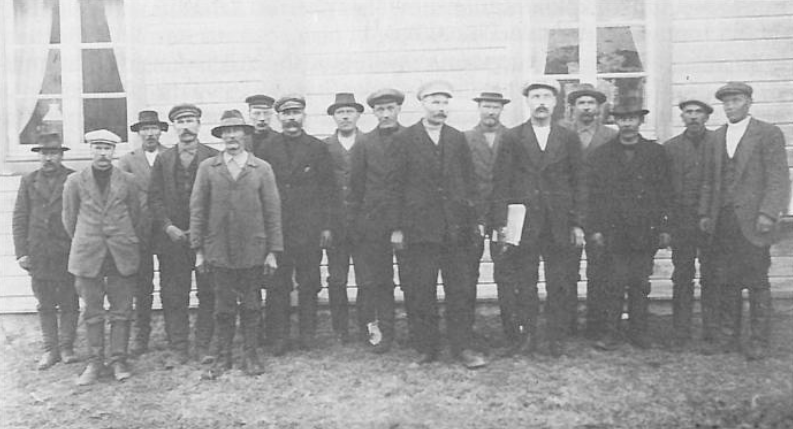
Politics did not play a significant role in Jämijärvi at the beginning of the 20th century. The first municipal elections were held in Jämijärvi on 11 December 1918, but councillors were elected with less than a vote. In 1928, a compromise election was held. Political symbols did not yet appear on the lists in the 1920s, and there were three electoral lists, where some people could appear on all lists.
In the 1933 elections, the “Rural People's Electoral Alliance” and the “Social Democratic Small Farmers and Workers' Electoral Alliance” were already represented. The left was strong until 1936, after which the right has had a majority except for one post-war election. Overall, municipal life in Jämijärvi was peaceful during the turbulent years of the 1930s and even after.
The events and history of Jämijärvi are comprehensively described in Olavi Heikkilä's works on Jämijärvi. You can browse the works on Jämijärvi at the Jämijärvi Society website. from the website.
Marshal of Finland CGE Mannerheim While serving as Chairman of the Finnish Defense Council from 1931 to 1939, he visited Germany in 1935 to familiarize himself with the newly established Luftwaffe. Part of the visit included an introduction to gliding as part of the pilots' basic training.
In the same year, Suomen Kuvalehti organized a competition to find the center of gliding in Finland. Farmer Value Container entered the competition, proposing Soininharju as the location for the gliding centre. The competition between the different locations was tight and in the end Kontti's proposal won. The decisive factors were the large open area and the ridge rising from the landscape. Kontti received a flight ticket from Helsinki to Stockholm to Helsinki as a prize.
The Jämi Aviation School was founded in the same year, 1935, with its director TB NissinenThe field was cleared by a large group, including numerous people from Jämijärvi and young people from various aviation clubs around the country. The first air show was held on August 12, 1935, with participants staying in local houses and the local Lotta organization taking care of the maintenance.
Jämi prepared for the 1939 Olympics with significant investments and plans, preparing to accommodate 150 competitors. The Reverend AY Häyrinen investigated the possibility of accommodation in private apartments for a total of 400 people. However, the war interrupted the plans. During the wars, Jämti was quieter in terms of aviation activities, but construction continued.
Jämi, who began as director in July 1948, Eero Pakarinen developed Jämi's year-round activities: flying in the summer and skiing in the winter, autumn and spring are filled with various course activities. Pakarinen was in the process of founding the flying circus Pilven huimapäiä, which toured the country until 1954, raising funds for Jämi's activities. The Germans filmed the film 08 in Jämi in 1955. A "Ukrainian village" with thatched roofs was built in Jämi. Aircraft construction increased in the 1950s.
Glider manufacturing has been a significant employer in Jämijärvi. The PIK-20 series of gliders and motor gliders manufactured in the municipality have been a successful product of Finnish aircraft design. The aircraft were manufactured by Molino Oy, later Eiriavion Oy.

In addition to aviation, Jämti has become the home of numerous other hobbies. For decades, dog sledding enthusiasts, skiers, orienteers and many other sports have been active in Jämti, not forgetting winter golf. In recent years, hiking and nature tourism have also increased in importance. Find out more about Jämti's activities from here.
Jämijärvi has been a net migration winner throughout the 2020s. In 2025, the population of Jämijärvi grew overall. Return migrants, pensioners and families with children are moving to the municipality. In particular, the new Pääsky (school), which was completed in 2022, has been on the minds of many families and younger migrants. In addition, many people who originally worked in the municipality due to their hobbies have moved to the municipality. For example, Jäm's aviation, dog sledding and other hobbies have brought permanent residents to the municipality.
Jämijärvi is a traditional rural town on the border of two provinces, an hour from Pori and Tampere. It is easy to commute from us and fiber optic also allows remote working. Welcome to Jämijärvi!
- Heikkilä Olavi. Lake Jämijärvi through the centuries. 1992.
- Vasko Tiina. Archaeological inventory of the coastal sub-plan area. 2017. Satakunta Museum. In the document Jämijärvi coastal sub-plan. 2020.
- Finnish Genealogical Society, information about Finnish parishes.
- Academy shampoo.
Shortcuts
Contact information
Autio Aku
mayor
General administration
Peijarintie 5 A
38800 Jämijärvi